"The creation of a thousand forests is in one acorn."
Ralph Waldo Emerson
FREE MICRODOSING class with newsletter sign up. Click here!
- Home
- mushroom growing
- Grow Mushrooms At Home
Grow mushrooms at home like the pros
Growing mushrooms at home is one of the most rewarding hobbies you can pick up.
It is also one of the most forgiving once you understand a few basics.
Whether you want to grow gourmet oyster mushrooms for your kitchen or experiment with growing magic mushrooms, this page walks you through everything you need to know to get started and keep going.
You do not need a science degree.
You do not need a big budget.
You just need:
- some patience
- a willingness to keep things clean, and
- the information on this page.
Let's dig in.
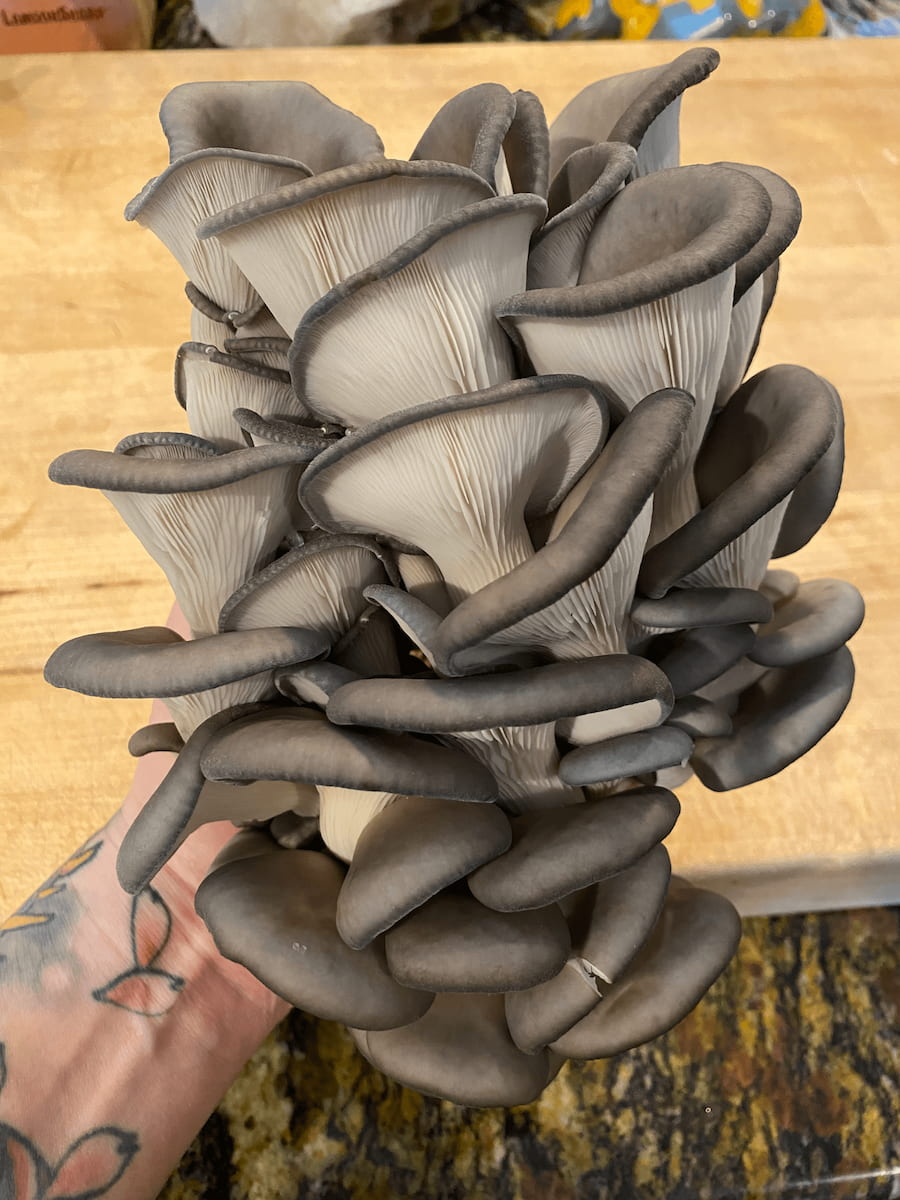 oyster mushrooms
Frequently asked questions- the basics
1. Can you grow mushrooms indoors year-round?
Yes—many species can fruit indoors with stable temps, humidity, and fresh air.
2. Do mushrooms need light to grow?
They don’t “photosynthesize” like plants, but many (not all) use light as a cue for direction/timing.
3. What temperature range is best for growing mushrooms at home?
Most common home species do best in cool-to-mild indoor temps, but it greatly varies by species.
4. What humidity do mushrooms need indoors?
Usually high humidity during fruiting; too dry stalls growth, too wet invites problems.
5. How long does it take to grow mushrooms at home (start to harvest)?
Kits can be fast; DIY methods vary widely by species and setup.
6. What’s the difference between mushroom spawn and spores?
Spawn is “ready-to-grow” mycelium; spores are for starting genetics and are less beginner-friendly.
Free 4-Part Microdosing Mushrooms Class
7. Where is the best place in my home to grow mushrooms (closet, basement, kitchen)?
Anywhere you can control humidity and fresh air while keeping things clean.
8. Do I need a pressure cooker to grow mushrooms at home?
Not for kits or many low-tech methods; it becomes useful when you’re making sterile grain spawn (which is recommended for growing magic mushrooms at home).
9. What does contamination look like (and when should I throw it out)?
Unusual colors/smells/slime are red flags; when in doubt, isolate and discard.
10. Why are my mushrooms long and skinny (leggy)?
Commonly a fresh-air/CO₂ issue—adjust air exchange and fruiting conditions.
If you are growing a gourmet kit, I like to place them in a sideways cooler or plastic bin so the CO2 spills out the side.
With a monotub for magic mushrooms, leggy mushrooms just means you need increase your FAE's (fresh air exchanges).
11. Why are my mushrooms cracking or drying out?
Usually low humidity or uneven moisture at the surface.
12. How many harvests can you get from one block/kit?
Often multiple “flushes,” but yields drop each round and your chance of contamination goes up with each subsequent flush.
13. Can I reuse a mushroom grow kit or substrate?
Typically not for the same yield; spent substrate is better composted or repurposed.
With oyster mushroom kits, you can get two nice-sized flushes...

14. Can I grow mushrooms in an apartment (small space setup)?
Yes—small tubs, bags, or kits can work well with basic humidity control.
15. Can I grow mushrooms on coffee grounds or cardboard?
Sometimes, but success depends on species and how clean/prepped the substrate is.
When I first started my gourmet mushroom kit business, I was getting coffee grounds from a local Starbucks.
All of my kits ended up with mold contamination.
Why?
Because coffee, especially coffee from the US (because we have the loosest coffee trade laws in the world, is saturated with mold.
Gross.
16. How do I harvest mushrooms without ruining the next flush?
Wash your hands!
Harvest cleanly (twist/cut depending on species) and keep the surface tidy.
17. How should I store fresh mushrooms after harvesting?
Cool, breathable storage is best; avoid sealed-wet containers.
Gourmet mushrooms can be stored in paper bags or sealed containers in the fridge for up to 10 days.
Magic mushrooms (once cracker crisp) should be stored in a dry, airtight container, or frozen.
18. How do I dry mushrooms at home for storage?
Low, steady heat + airflow until fully cracker-dry (method depends on what you have).
19. Can I compost spent mushroom substrate?
Yes—spent blocks are great compost/soil builders.
20. Do homegrown mushrooms smell (and how do I manage it)?
Usually mild/earthy; airflow and clean substrate prevent strong odors.
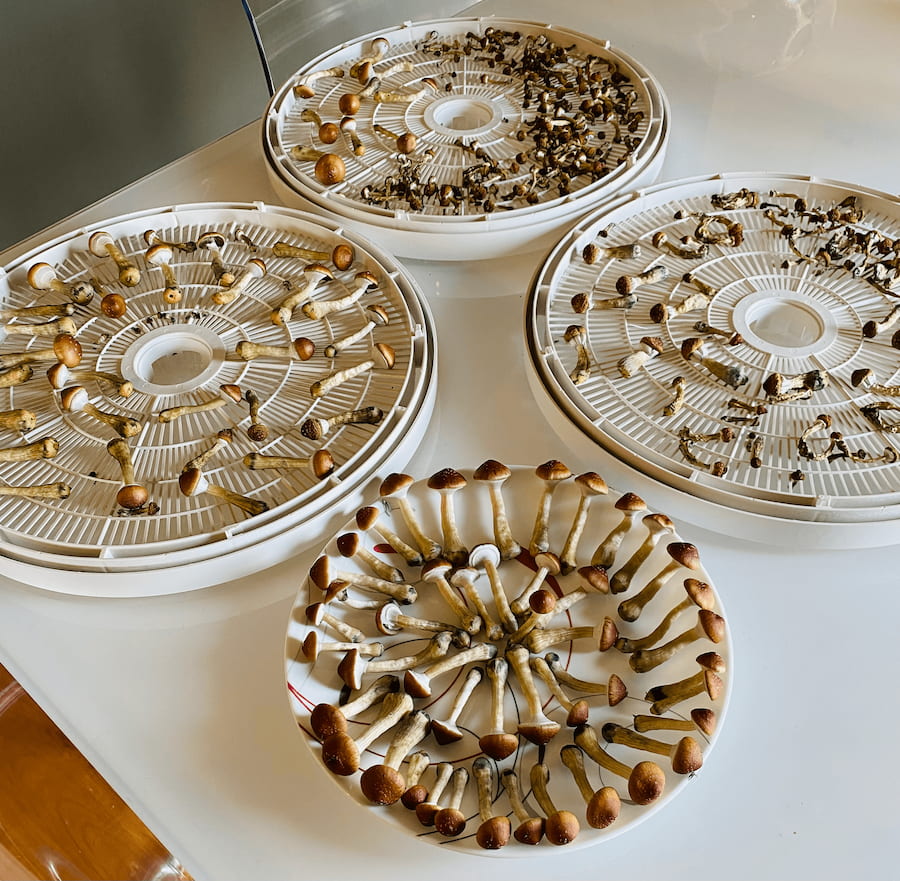 home grown psilocybin
Now let's dig in deeper...click on each link below for a more in-depth discussion.
Which Growing Method Should I Start With?
How Much Does It Cost to Start Growing Mushrooms at Home?
What Supplies Do I Need to Start Growing Mushrooms at Home?
How Do I Balance Humidity and Fresh Air Exchange When Growing Mushrooms Indoors?
How Can I Grow Oyster Mushrooms at Home Without a Kit Step by Step?
Why did my mushroom grow stall, and what should I check first?
What is the easiest mushroom to grow at home for beginners (oyster vs shiitake)?
How can I prevent contamination when growing mushrooms at home (beginner sanitation checklist)?
You might like these
How fast do mushrooms grow? You won't believe your eyes!
How fast do mushrooms grow? Explore the fascinating world of fungi and be amazed by their rapid growth rates. Learn about the factors influencing their speed and more.
How To Grow Magic Mushrooms Grow List
Grow list with links to products to accompany
How to grow magic mushrooms for healing. The EASY way taught by pros
Learn how to grow magic mushrooms at home for healing and self-discovery. Simple methods, potent harvests, and spiritual growth await. Start your journey today!
How to Grow Mushrooms at Home: Easy Tips for Beginners
Discover the secrets to mushroom growing at home. Get step-by-step tutorials, top kit recommendations, and expert tips to grow fresh fungi in your own kitchen!
Which growing method should I start with? Kits, monotubs, or logs?
Discover the best mushroom growing method for beginners. Compare kits, buckets, mono tubs & logs to find which suits your space, budget & experience level.
How Much Does It Cost To Start Growing Mushrooms? A Budget Breakdown
Discover the real costs of growing mushrooms at home. From budget-friendly setups to advanced kits, learn what you need to start your mushroom-growing journey today!



Recent Articles


-
Spawn-to-Bulk Contamination Prevention Checklist That Works
Aug 09, 26 07:04 PM
 Tired of contamination ruining your spawn-to-bulk mix? This prioritized checklist covers what actually matters most at the mixing step. Save your grow!
 -
Spawn-to-Bulk Troubleshooting: Fix Stalls, Smells, and Patchy Growth
Aug 09, 26 05:51 PM
Spawn-to-bulk problems? Diagnose stalled colonization, bacterial smells, wet spots, and patchy growth with this symptom-based troubleshooting guide. -
Spawn to Bulk Basics: Your Step-by-Step Guide to Getting It Right
Aug 09, 26 04:51 PM
Learn how to spawn to bulk the right way. From checking your spawn to mixing clean, this beginner guide covers every step so your mushroom tub thrives, not dies. -
How To Set Up A Clean Inoculation Space At Home Without A Lab
Aug 08, 26 07:53 PM
Learn how to set up a clean inoculation space at home without a lab. A calm, practical SAB workflow that keeps contamination low and confidence high. -
Why Beginners Over-Mist: Read Your Mushrooms, Not Your Hygrometer
Aug 08, 26 06:44 PM
Stop chasing humidity numbers. Learn to read substrate surfaces, cap condition, and pin health to prevent over-misting and grow better mushrooms. -
Stop Chasing Humidity Numbers and Start Reading Your Mushrooms
Aug 08, 26 05:03 PM
Bad sensor placement and over-misting cause more problems than low humidity ever will. Learn where to place your hygrometer and what readings actually matter.


- Home
- mushroom growing
- Grow Mushrooms At Home


Follow me and spread the spores!