"Start where you are. Use what you have. Do what you can."
Arthur Ashe
FREE MICRODOSING class with newsletter sign up. Click here!
Kit, Bucket, Monotub, or Log?
How to Pick the Right Mushroom Growing Method as a Beginner
You're ready to grow mushrooms, but one look at the options and you're already overwhelmed.
Should you start with:
- a simple grow kit
- try the popular bucket method
- build a monotub, or
- go old-school with logs?
Each method has real trade-offs in cost, effort, time to harvest, and the types of mushrooms you can grow.
The right choice depends on where you are right now — your budget, your space, how much hands-on work you actually want, and whether you're growing for fun, for food, or to eventually sell at a farmers market.
This guide breaks down all four methods side by side so you can skip the guesswork and start growing with confidence.

You have two realistic options for a first grow
Option one: An oyster mushroom grow kit.
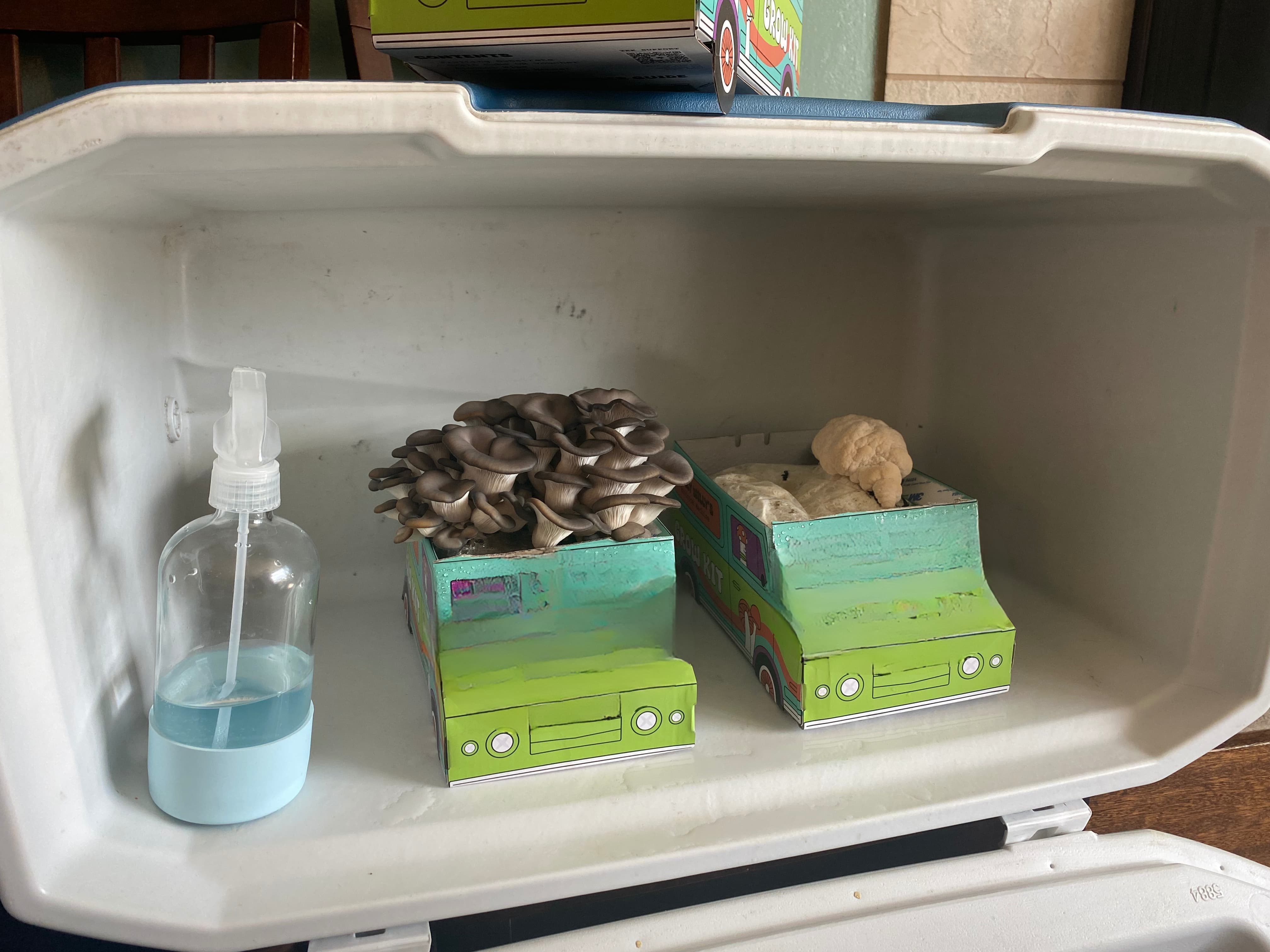 No fancy fruiting chambers needed for gourmet mushroom kits. I just use a sideways cooler or plastic bin. The bin needs to be sideways so the CO2 (gas) doesn't build up (which causes long, "leggy" mushrooms"
This is the lowest-friction starting point.
A quality mushroom grow kit guide will walk you through the basics, but the process is straightforward.
You receive a colonized block, cut or open it according to the instructions, mist it regularly, and give it fresh air.
Within one to three weeks you are typically harvesting your first mushrooms.
Oyster mushroom kits are the most reliable for beginners.
They:
- fruit fast
- tolerate a range of temperatures, and
- produce visible pins quickly enough to keep you engaged.
If you want a recommendation, look for kits from small-scale growers rather than mass-market novelty brands.
The spawn quality is usually better, and the instructions tend to be more honest about what to expect.
Click here to check out Psilly Willy's oyster mushroom grow kit and get 10% off.
Option two: A simple bucket grow with pasteurized straw.

If you want to feel more hands-on from the start, a basic beginner mushroom grow set up using a five-gallon bucket, pasteurized straw, and purchased grain spawn is a great entry point.
It costs a little more in time and effort, but it teaches you:
- substrate preparation (preparing the "food" the mushroom spawn will eat)
- colonization timing (how fast the mushroom mycelium grows)
- fruiting conditions in a single project (conditions your mushrooms "fruit")
Oyster mushrooms are still your best species choice here.
The bucket method is forgiving, and oyster spawn colonizes straw aggressively enough to outcompete most contamination in a properly pasteurized substrate.
Click here to learn what supplies you need to start growing mushrooms at home.
Pick one.
Do not deliberate between them for days.
Both work.
Both teach you something real.
The only wrong choice is the one you never start.
Monotub?
Monotubs are best for growing psilocybin mushrooms.
I teach you everything you need to know using this method in my grow book.
Logs?
There are pros and cons to growing on logs, but I don't recommend logs for beginners wanting to grow gourmet mushrooms.
One pro is they yield very high-quality Mushrooms over many years.
Cons are:
- they take forever to colonize and initially start fruiting
- they take up a lot of space for their yield
- they are typically only outdoor because of time requirement
You might like these
How fast do mushrooms grow? You won't believe your eyes!
How fast do mushrooms grow? Explore the fascinating world of fungi and be amazed by their rapid growth rates. Learn about the factors influencing their speed and more.
How To Grow Magic Mushrooms Grow List
Grow list with links to products to accompany
How to grow magic mushrooms for healing. The EASY way taught by pros
Learn how to grow magic mushrooms at home for healing and self-discovery. Simple methods, potent harvests, and spiritual growth await. Start your journey today!
How to Grow Mushrooms at Home: Easy Tips for Beginners
Discover the secrets to mushroom growing at home. Get step-by-step tutorials, top kit recommendations, and expert tips to grow fresh fungi in your own kitchen!
Grow Mushrooms at Home: Easy First Harvest
Ready to grow mushrooms at home? Our complete guide shows you the best methods, easiest kits, and expert tips for a fresh, delicious harvest right indoors.
How Much Does It Cost To Start Growing Mushrooms? A Budget Breakdown
Discover the real costs of growing mushrooms at home. From budget-friendly setups to advanced kits, learn what you need to start your mushroom-growing journey today!



Recent Articles


-
Spawn-to-Bulk Contamination Prevention Checklist That Works
Aug 09, 26 07:04 PM
 Tired of contamination ruining your spawn-to-bulk mix? This prioritized checklist covers what actually matters most at the mixing step. Save your grow!
 -
Spawn-to-Bulk Troubleshooting: Fix Stalls, Smells, and Patchy Growth
Aug 09, 26 05:51 PM
Spawn-to-bulk problems? Diagnose stalled colonization, bacterial smells, wet spots, and patchy growth with this symptom-based troubleshooting guide. -
Spawn to Bulk Basics: Your Step-by-Step Guide to Getting It Right
Aug 09, 26 04:51 PM
Learn how to spawn to bulk the right way. From checking your spawn to mixing clean, this beginner guide covers every step so your mushroom tub thrives, not dies. -
How To Set Up A Clean Inoculation Space At Home Without A Lab
Aug 08, 26 07:53 PM
Learn how to set up a clean inoculation space at home without a lab. A calm, practical SAB workflow that keeps contamination low and confidence high. -
Why Beginners Over-Mist: Read Your Mushrooms, Not Your Hygrometer
Aug 08, 26 06:44 PM
Stop chasing humidity numbers. Learn to read substrate surfaces, cap condition, and pin health to prevent over-misting and grow better mushrooms. -
Stop Chasing Humidity Numbers and Start Reading Your Mushrooms
Aug 08, 26 05:03 PM
Bad sensor placement and over-misting cause more problems than low humidity ever will. Learn where to place your hygrometer and what readings actually matter.


Follow me and spread the spores!