“In a time of deceit, telling the truth is a revolutionary act.”
George Orwell
What is the downside of lion's mane mushrooms?
3 downsides to be aware of
So, what is the downside of lion's mane mushrooms?
Sure, you’ve heard the buzz about the "smart mushroom."
Your friends are putting it in their coffee, the internet claims it will turn you into a genius with the focus of a laser beam, and it is having a massive cultural moment.
Because you are here, you are smart enough to pause and ask...
"What is the downside of lion's mane?"...
Before you purchase lion's mane as a supplement or a fresh gourmet mushroom...give me a few moments of your time..I promise to make it worth it.

I’ve been there too, standing in the supplement aisle, wondering if I’m buying a miracle or a migraine.
That sent me down the research rabbit hole of medicinal mushrooms, where I have never been so frustrated in my life...
And I have over half my age (lol!) in years with medical research experience!
It is totally normal to feel cautious!
You want to banish brain fog, not trade it for a stomach ache or something worse...
When I hear the question, "What is the downside of lion's mane mushrooms?"...
The first place my brain goes is to a comparison.
When weighed against the side effects of the four prescription drugs the average American takes daily, lion’s mane is an absolute angel!
However, I understand how the logical, critical-thinking human brain works.
It is a valid question, especially when this fungus is touted as a miracle for:
- healing the brain,
- improving cognition,
- warding off Alzheimer's,
- boosting mood...and so much more.
Let’s strip away the marketing hype and look at the real risks—and the science—so you can decide if this fungus is your friend or foe.
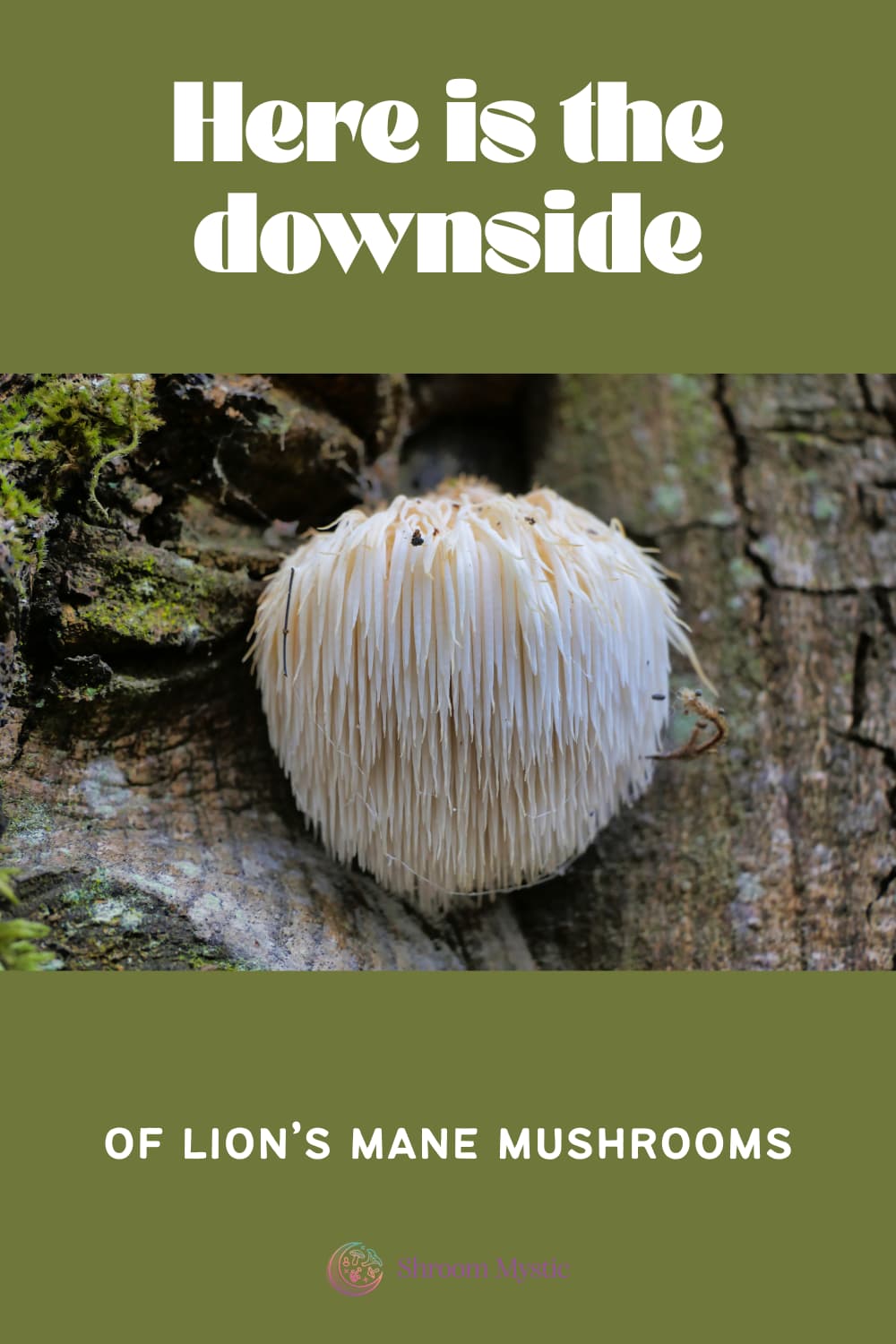
#1 The "Mushy Tummy" Phenomenon
While the benefits are profound, we must look at the whole picture.
There are people who do, in fact, experience "mushy tummy"—or abdominal discomfort—especially when taking the capsule form.
We are talking about:
- bloating,
- nausea, or
- the kind of stomach pain that makes you regret your life choices.
This discomfort is rarely the fault of the mushroom itself, but rather how it is prepared.
Most supplement companies are riding the tidal wave of popularity surrounding fungi.
Everyone wants to offer a mushroom supplement, and most companies have:
- no idea how to properly extract lion's mane mushroom
- are purposely deceiving you because there is no regulation of supplements and they put fillers like grain and sawdust in their products
However, mushrooms are ancient organisms.
Fungi have existed for roughly one billion years—long before most other complex living organisms.
To survive that long, they developed a hard cellular armor known as chitin.
This is the same tough material found in the exoskeletons of crustaceans.
Here lies the problem:
Human beings do not have enough of the enzyme chitinase required to digest chitin.
If you buy from a company that doesn't extract their mushrooms, you are essentially eating raw, indigestible chitin.
Think of it like eating a giant bowl of fiber when you aren't used to it; things can get a little "musical" and uncomfortable in your gut!
If you take this in capsule form, you have completely bypassed the first and most important part of the human digestive process: the mouth, chewing, and saliva.
This is especially true if you are taking, say dried lion's mane you grew yourself (yay!) and ground up and placed in capsules.
Talk about a gut bomb!
If, however, your mushroom supplement has been properly extracted, or if you cooked your fresh gourmet lion's mane mushrooms, you have WAY less chance of having stomach upset because you properly extracted the medicinal compounds and nutrition from the chitin.

Extracts in mushrooms supplements are the gold standard
In all valid clinical trials on lion’s mane mushrooms, the gold standard is the **extract form**.
This means the medicinal components are extracted using heat and water (or alcohol).
This process breaks down the tough chitin, allowing the nutrition to be released and absorbed by our fickle digestive tracts.
If you choose a product that uses this gold standard of extraction, gastric upset becomes highly improbable.
An investment in knowledge pays the best interest.
— Benjamin Franklin, *The Way to Wealth* (1758)
#2 The Hidden Downside: The Industry Scam
This leads me to the most pervasive downside of lion’s mane mushrooms.
The number one downside is not the fungus itself, but the lack of high-quality supplements and the prevalence of companies lacking integrity.
As I stated earlier, the supplement industry is like the Wild West.
Many manufacturers who have no idea what they are doing simply grind up dried lion's mane mushrooms—or worse, the root system known as mycelium growing on grain—put the powder in a capsule, and say "Voila!"

An analogy for you...
They don't just put the "apple pie" (the mushroom) in the bottle; they put the dirt, the tree roots, and the branches and the bugs in the bottle (thanks Mushroom Revival for the analogy).
This is often referred to as "mycelium on grain."
Because the supplement industry is loosely regulated, they can and do intentionally deceive you.
You end up paying top dollar for expensive spicy rice powder (starch) rather than the medicinal compounds you are seeking.
If you aren't reading labels carefully, the downside is simply that you are getting ripped off and won't feel any benefits.
You wouldn't want to buy the apple tree, the dirt and the bugs when you buy an apple pie, right? Why would you do that with your mushroom supplements?
Erin
#3 Specific Medical Risks: Who Should Be Careful?
Once you navigate past the low-quality fillers and find a genuine extract, the "downside" shrinks significantly.
However, there are specific biological factors you need to be aware of.
Allergies and "The Itch"
First off, let’s talk about the most obvious red flag: allergies.
If you break out in hives after eating a portobello burger, lion's mane mushrooms are definitely not for you!
Even if you aren't allergic to dinner mushrooms, there is a quirky side effect known as the "itch."
Because Lion's Mane boosts Nerve Growth Factor (NGF), some users report their skin feeling itchy or tingly.
It’s usually a sign the nerves are healing, but let’s be honest—feeling like you’re wearing a wool sweater in July isn't exactly fun.
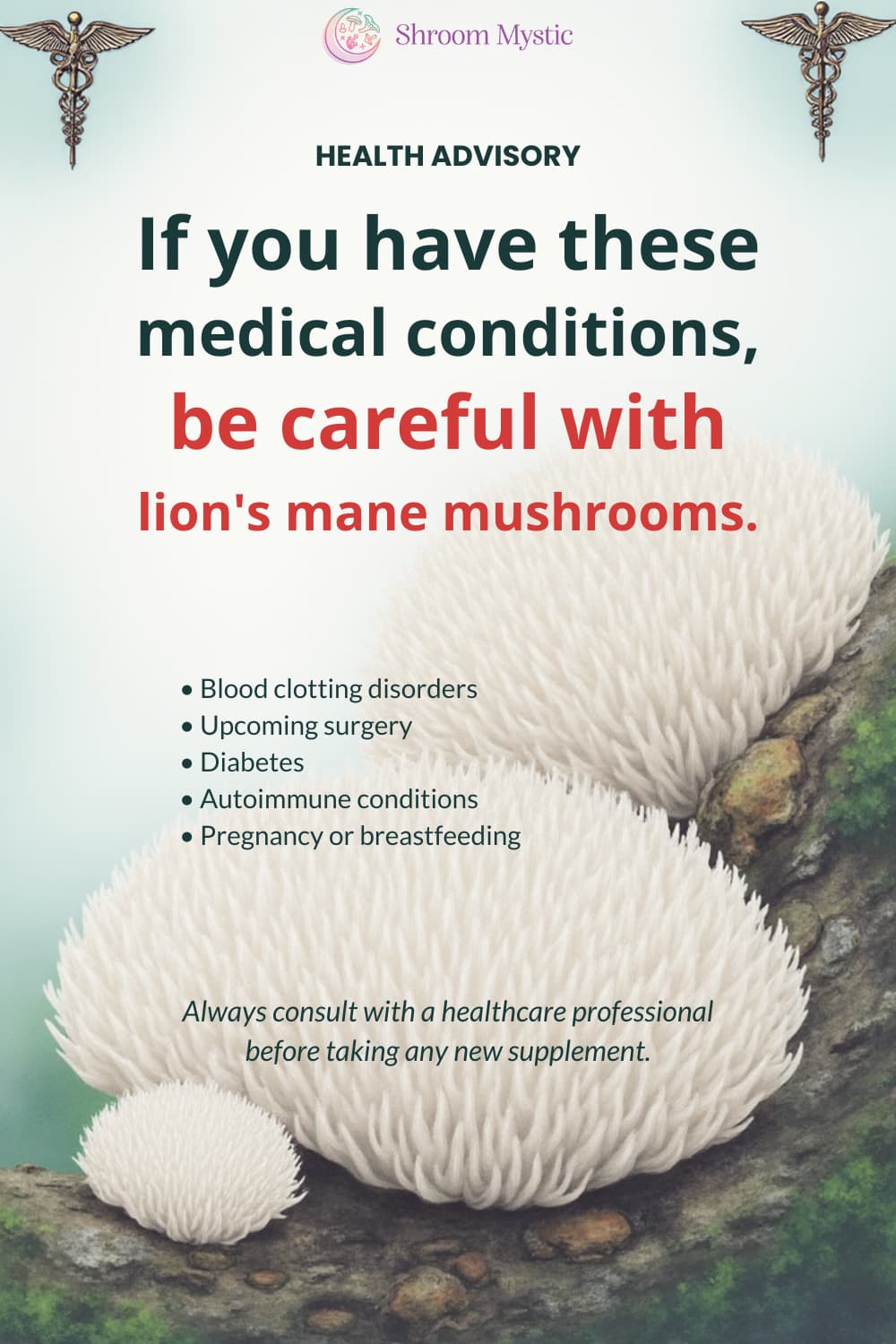
Blood Thinners and Surgery
If you are taking blood thinners or have a bleeding disorder, you need to pay close attention.
Lion’s Mane has been shown to slow down blood clotting.
This might sound cool in a science lab, but in real life, it means you might bruise like a peach or bleed longer than usual if you get a cut.
This is also why some doctors might tell you to stop taking it at least two weeks before any scheduled surgery.
Blood Sugar and Diabetes
Do you struggle with blood sugar issues or diabetes?
This mushroom might actually work *too* well.
Studies suggest that Lion’s Mane can lower blood sugar levels.
While that sounds like a benefit, it can be dangerous if you are already taking medication like insulin to lower your glucose.
Combining the two could cause your blood sugar to crash into hypoglycemia territory, leaving you feeling shaky or dizzy.
Autoimmune Conditions
Here is a tricky one: the immune system.
Lion’s Mane stimulates immunity, which is great for fighting off a cold, but potentially bad if you have an autoimmune disease like:
- Lupus,
- Rheumatoid Arthritis, or
- Multiple Sclerosis.
In these conditions, your immune system is already attacking your body, and revving it up further with mushrooms could make your symptoms worse.
Pregnancy or Breastfeeding
The Science: Why It Is Worth the Effort
If you don't fall into those specific medical categories, and you manage to avoid the low-quality "grain" supplements, the benefits of lion's mane mushrooms are backed by fascinating science.
Lion’s mane (*Hericium erinaceus*) contains two unique classes of compounds:
- hericenones and
- erinacines.
These compounds are powerful stimulators of Nerve Growth Factor (NGF).
NGF is a protein that plays a major role in the:
- maintenance,
- survival, and
- regeneration of neurons.
As we age, NGF levels decline, leading to cognitive decline.
Here is the upside of lion's mane mushrooms
1. Cognitive Improvement and Dementia
In a double-blind, parallel-group, placebo-controlled trial published in *Phytotherapy Research* (2009), Japanese researchers studied men and women aged 50 to 80 diagnosed with mild cognitive impairment.
The group taking lion’s mane tablets three times a day for 16 weeks showed significantly increased scores on the cognitive function scale compared to the placebo group.
Interestingly, when they stopped taking the supplement, their scores decreased, suggesting that consistent use is key (Mori et al., 2009).
2. Reduction in Depression and Anxiety
Lion’s mane isn't just for memory; it’s for mood.
A study published in *Biomedical Research* (2010) examined the effects of lion’s mane on menopause-related symptoms.
Over four weeks, the women taking the mushroom concentrate reported significantly lower levels of irritation and anxiety compared to the placebo group.
The researchers concluded that lion’s mane likely functions to support the brain's emotional regulation centers (Nagano et al., 2010).
3. Nerve Regeneration
A study in the *International Journal of Medicinal Mushrooms* (2013) found that lion’s mane extract promoted peripheral nerve regeneration after injury in animal models.
This suggests potential applications for conditions involving nerve damage (Wong et al., 2012).

There is lack of long-term human studies meaning we don't fully know the safety profile for taking it daily for five or ten years.
Again, compared to the average of 4 pharmaceuticals every American is on...my bet is on the mushrooms.
You are, in a sense, an early adopter.
However, in the clinical trials we *do* have, serious side effects are extremely rare.
If you have any chronic illness, be sure to speak with your provider before starting any medicinal mushroom.
Real Mushrooms Lion’s Mane Review: The Gold Standard
So, how do you navigate this?
If you decide to proceed, quality is your safety net.
If you are spending your hard-earned dollars on a supplement to achieve these results, why wouldn't you go for the best?
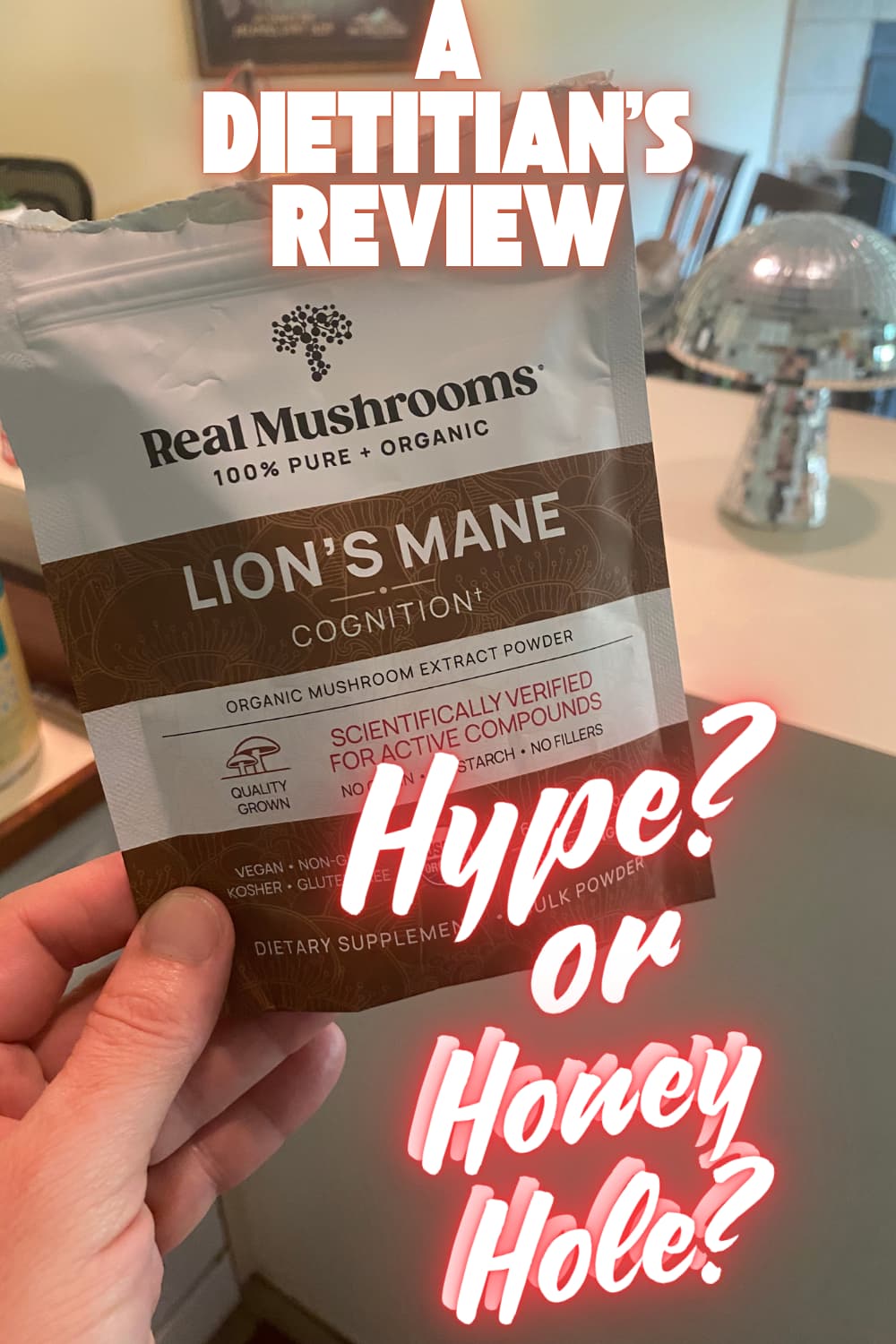
This brings us to a quick Real Mushrooms lion’s mane review.
The downside of the industry is poor quality, but companies like Real Mushrooms solve this by:
- Using the Fruiting Body: They use the actual mushroom, not the mycelium (roots) grown on grain. This means you aren't paying for rice or oats.
- Extraction: They use hot water extraction to break down the chitin, ensuring you don't get that "mushy tummy" and that your body can actually absorb the beta-glucans.
- Transparency: They list the exact percentage of beta-glucans on the label. Most companies hide this because their numbers are low.
- 3rd Party Testing: They verify their product for purity and potency.
Nobody is forcing them to do this. They do it out of pure integrity.


If you purchase a product through the links on this page, I receive a small commission at no cost to you. I was not paid to review these products, and I did not receive it as a freebie. I'm suggesting it to you because I own it and love it, and I think you would, too. For more info, please see this policy.
As an Amazon affiliate I earn from qualifying purchases.
Conclusion
So, to recap, what is the downside of lion's mane mushrooms?
The downside is that it requires you to be a smart consumer, which you've proven if you've made it to the end of this article with me!
If you buy cheap, non-extracted mycelium products, you are wasting your money, you are likely to get a stomach ache, and you won't see the neurological benefits promised by the clinical trials.
If you are pregnant, breastfeeding, on blood thinners, or have an autoimmune condition, the answer is likely "too risky without a doctor's note."
For everyone else, the downsides are mostly mild and manageable.
My advice?
Treat it like a science experiment.
Start with a low dose, listen to your body, and see if your brain fog lifts.
If you choose a high-quality extract, the only "side effect" you are likely to experience is a:
- sharper mind,
- a better mood, and
- a healthier brain.
Your health is the priority, so stay curious but stay safe!